Sizing & Fitment
Are All 6-Bolt Disc Rotor Bolts Interchangeable? Size, T25 & Torque Explained
Learn how to check M5×10 and T25 rotor bolts for fit, thread engagement and clearance—and where to find the correct installation torque.
Published: · Updated:
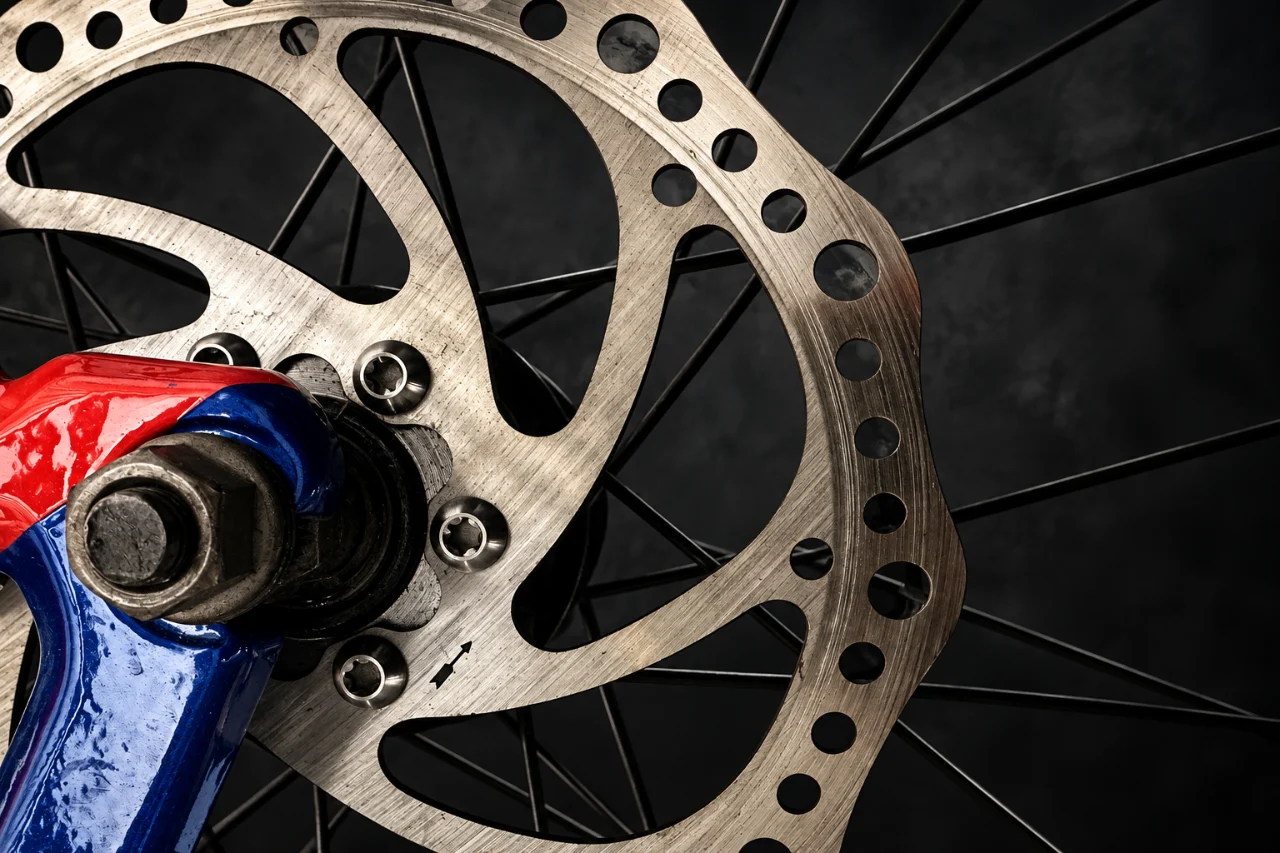
No. A six-bolt mounting pattern does not make every rotor bolt interchangeable. M5×10 and T25 describe useful features, but they do not establish the head shape, usable thread engagement, hub clearance or permission to replace the original hardware. Check the rotor, hub and replacement bolt together before making a change: this is a brake connection, not a cosmetic fastener swap.
What Is a 6-Bolt Disc Rotor?
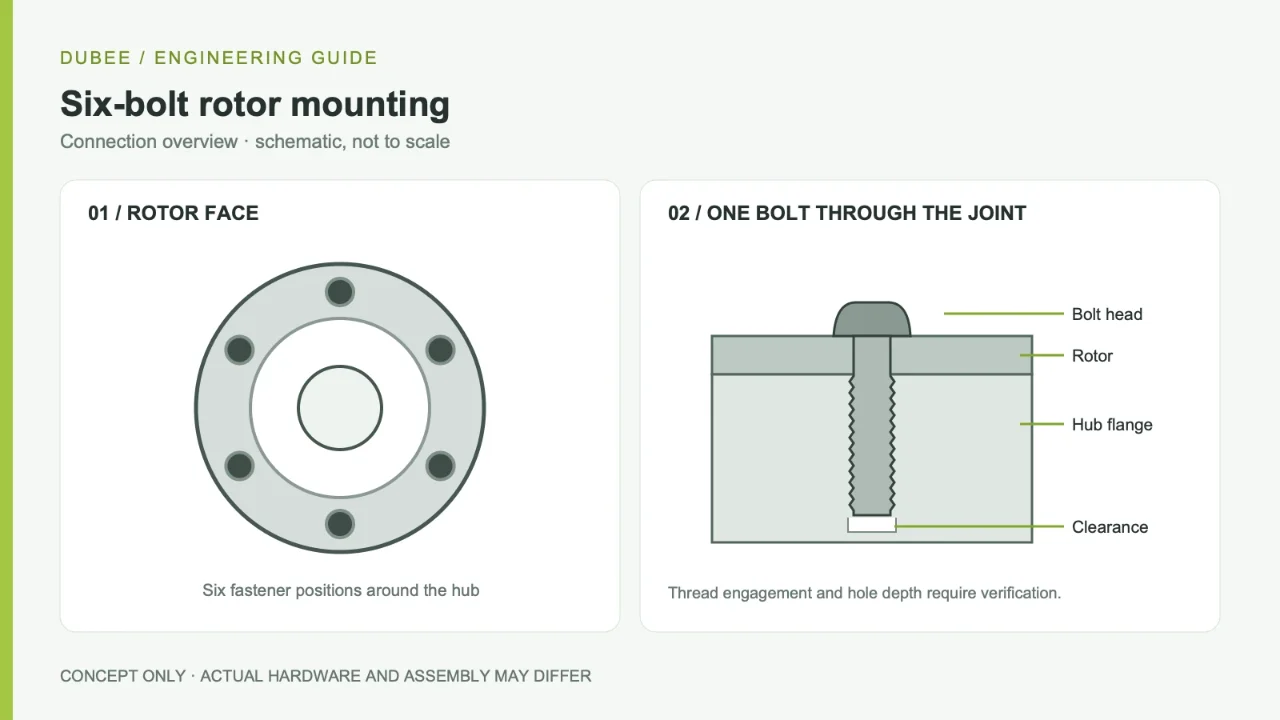
A six-bolt rotor attaches to a hub flange with six fasteners around the center of the rotor. The bolts clamp the rotor against the mounting surface so the assembly can transmit braking loads. Center Lock is a different arrangement: the rotor fits a splined interface and is retained by a lockring. The two mounting systems are not interchangeable simply by changing bolts; an adapter, where available, must be approved for the parts involved.
Six mounting holes describe the interface, not a complete specification for every piece of hardware. Some assemblies also use manufacturer-specific washers, locking parts or adapters. Keep those parts together and consult the instructions for the actual configuration.
Understanding M5×10 T25 Rotor Bolts
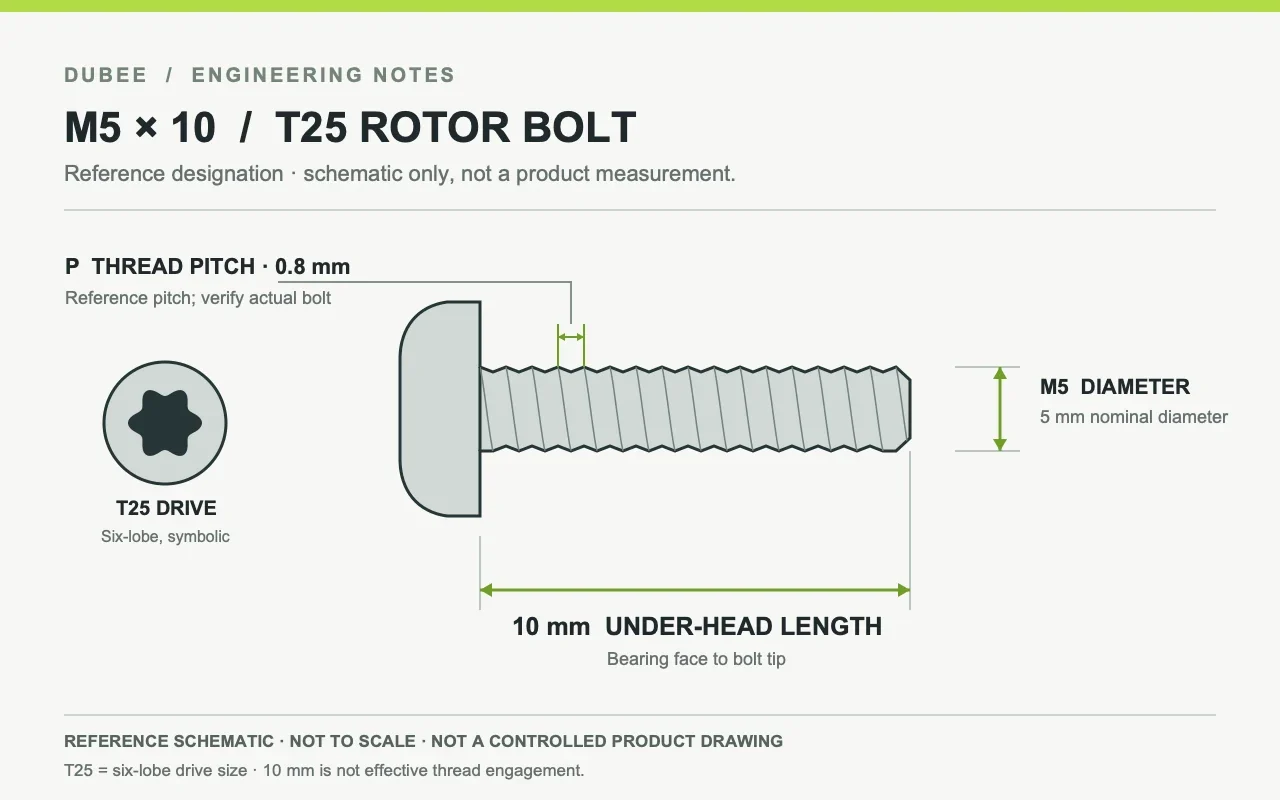
M5 is a nominal metric thread diameter of 5 mm. It does not, by itself, specify length, head shape or the complete fit of the thread. Pitch is the distance between adjacent thread crests measured along the bolt axis. M5×0.8 identifies a 0.8 mm pitch; confirm pitch rather than relying on the diameter or a visually similar screw.
For a conventional protruding head, 10 mm normally means the distance from the bearing surface under the head to the end of the bolt. It is not the same thing as 10 mm of fully formed thread, or 10 mm of engagement inside a hub. The rotor thickness, any specified washer, the thread runout and the end of the bolt all affect the actual engagement.
T25 identifies the size of the internal six-lobe drive. It tells you which matching bit to use; it does not identify the outside shape of the head or prove that the bearing surface will fit the rotor. Seat a clean, undamaged bit fully in the recess. A poor fit can damage the drive before the correct tightening condition is reached.
The dubee M5×10 T25 Titanium Disc Rotor Bolts are listed under that designation. A separate product reference drawing labels a 0.8 mm pitch and shows length from under the head to the tip. That drawing is for reference, not a controlled production drawing or a measurement of a specific batch. Ask for confirmed specifications before assessing a particular installation.
Are All 6-Bolt Rotor Bolts Interchangeable?
No. Two bolts can both be M5 and still differ in ways that matter at the rotor mount.
Head and bearing surface
The underside of the head must bear correctly on the rotor or on the specified washer. Head diameter and height affect contact and clearance; a different profile may interfere with a recess, caliper or other nearby part. Do not assume a tapered, countersunk or rounded head can replace another simply because its thread starts in the hole.
Length, engagement and hole depth
A bolt that is too short may not engage enough usable hub thread. One that is too long may bottom out in a blind hole or contact another part before the rotor is clamped. In either case, the torque wrench can indicate a value without the intended joint being secured. The usable length depends on the whole stack and the hub's threaded depth, not just the number printed on the bolt package.
A specific counterexample is SRAM's Eagle Powertrain rotor procedure, which calls for 15 mm rotor bolts with the compatible rotor in that installation. It is a requirement for that system, not a length recommendation for other hubs or for dubee bolts.
Manufacturer-specific hardware
A rotor, hub or adapter maker may specify a particular bolt, locking method or assembly. Shimano's SM-RTAD05 dealer manual, for example, describes a specific adapter assembly with its own parts and a #15 six-lobe tool. Keep the prescribed hardware where substitution is prohibited or the replacement has not been approved for that configuration.
How to Check Rotor Bolt Compatibility
Start with the exact hub and rotor model numbers, including any adapter. Find the current installation instructions and replacement-parts information from their manufacturers. Compare the original fastener with the replacement: thread diameter and pitch, length datum, head dimensions, bearing surface and any washer or locking feature all matter.
A caliper and thread-pitch gauge can help identify the old bolt, but measurement alone does not establish its material, strength, thread tolerance or approval for a substitute. Check whether the bolt can engage the specified thread without bottoming, and whether its head and tip have the required clearances. Do not force a bolt through resistance; damaged threads or an incorrect pitch need attention before installation.
If the hub and rotor instructions differ, or the replacement maker cannot confirm the necessary details, resolve that with the manufacturers or a qualified bicycle mechanic. Retain the specified hardware until compatibility is established.
Rotor Bolt Torque and Threadlocker
There is no single installation torque for all six-bolt rotors or all titanium screws. The correct value belongs to the specified joint, hardware and installation condition. A value from another rotor, an unrelated M5 torque chart or a generic titanium table is not approval for your setup.
Use the instructions for the exact assembly to establish the tightening sequence, torque and tool. Follow the specified thread condition: a pre-applied locking patch, liquid threadlocker, clean/dry threads or lubrication are not automatically interchangeable. Friction influences how a given torque translates into bolt tension, so adding lubricant or threadlocker when it is not prescribed can change the result. Keep chemicals away from braking surfaces and follow their manufacturer's directions when their use is specified.
Before tightening, inspect the hub threads, rotor mounting faces, bolt heads and drive recesses for damage or contamination. During assembly use the specified hardware and sequence with a suitable torque wrench. Afterward, check seating and clearance as directed by the manufacturer; if anything binds, bottoms out or remains loose, stop and investigate before riding. A torque reading cannot by itself prove adequate engagement or a correct fit.
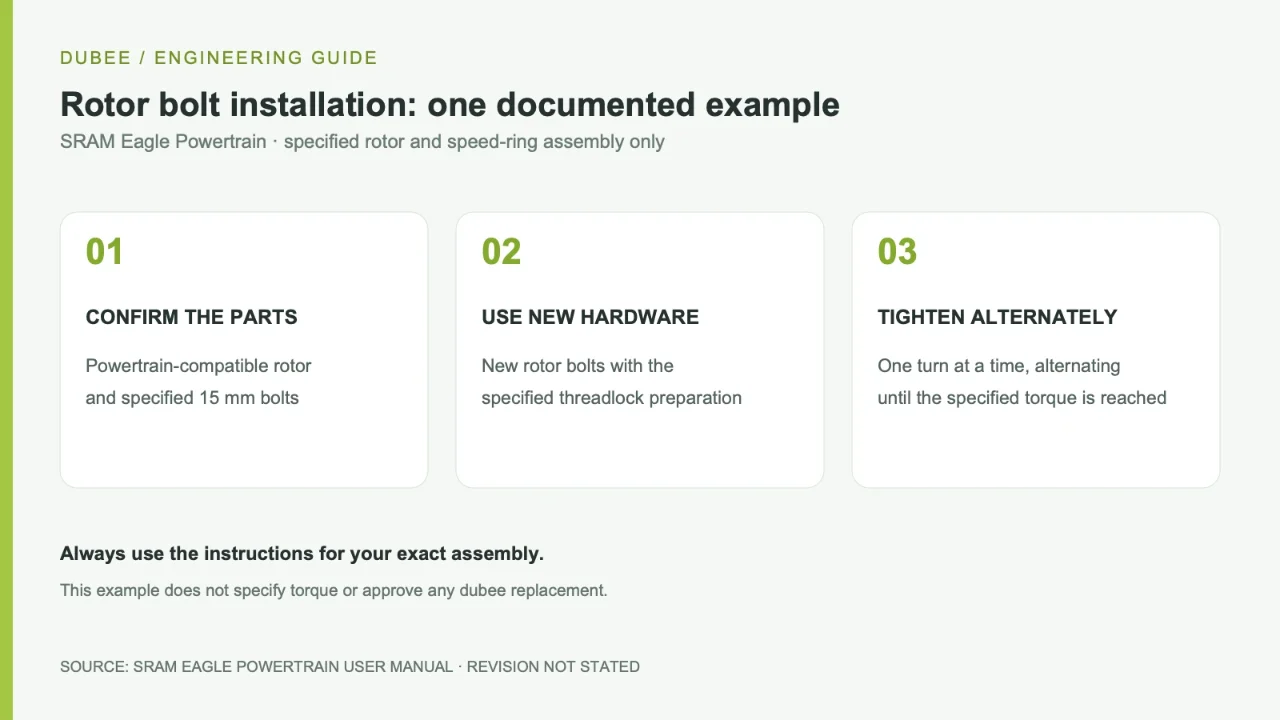
This example applies only to the specified SRAM Eagle Powertrain assembly. Follow the instructions for your own components.
Steel vs. Titanium Rotor Bolts
Titanium alloys are less dense than steel, so a titanium bolt of otherwise similar geometry can weigh less. Actual savings depend on the parts being compared. Titanium's corrosion behavior is useful in many environments, but the complete joint, other materials and service conditions still matter.
A material grade or an advertised material strength is not a test of a finished bolt or of its performance in a rotor connection. Replacing steel with titanium requires the correct geometry and installation conditions, suitable finished-fastener performance, and confirmation that the relevant manufacturers permit the substitution. If those conditions cannot be established, keep the original specified bolts. For material background, see our guide to TC4 titanium bicycle bolts.
Common Installation Mistakes
- Choosing by M5 or T25 alone and overlooking head shape, pitch or length.
- Treating the full under-head length as engaged thread, or failing to check for bottoming.
- Using a worn or incorrectly sized bit, or driving the bolt into damaged threads.
- Applying a torque found for a different rotor, hub or bolt.
- Assuming threadlocker is always necessary, or adding oil or anti-seize without checking the specified condition.
- Discarding required washers or locking hardware, or reusing bolts when the instructions require replacement.
Pre-Installation Checklist
What you can inspect or measure
- Identify the markings and compare thread diameter, pitch, under-head length and head profile with the original.
- Inspect the bolt, drive recess, rotor mounting face and hub threads for visible damage.
- Check the available clearance and look for possible contact or bottoming, without forcing the bolt.
What to confirm in manufacturer documentation
- Exact rotor, hub and adapter model compatibility, including whether the proposed replacement material and bolt are permitted.
- Required dimensions, usable engagement and hole depth; any washers or locking parts.
- Required bolt condition, reuse rules, thread treatment, tightening sequence and torque for the complete assembly.
When evidence is missing
Do not infer approval from a matching diameter, a brand name or a photograph. Missing engagement, load capability or substitution approval cannot be settled by visual inspection alone. Obtain the missing information or use the specified original hardware and seek professional assistance.
Frequently Asked Questions
Are all 6-bolt rotor bolts the same size?
No. Six holes identify a mounting arrangement, not a universal bolt specification. Check the manufacturer's instructions for the particular assembly.
Are M5×10 rotor bolts universal?
No. Even where the thread designation matches, head geometry, engagement, hole depth, clearance and manufacturer requirements must also match.
Do all rotor bolts use T25 Torx?
No. T25 is common, but some assemblies specify another drive. Use the size and type identified for the actual hardware; Shimano's SM-RTAD05 adapter instructions, for example, specify #15.
Can I replace steel rotor bolts with titanium bolts?
Only when the replacement is suitable for the complete connection and the relevant manufacturers permit it. A matching thread or a titanium grade alone is insufficient.
What torque should I use for rotor bolts?
Use the torque and installation conditions specified for your exact rotor, hub, adapter and approved hardware. Do not transfer a value from another model.
Can rotor bolts be reused?
Follow the instructions for the specific hardware. A manufacturer may require new bolts or a particular locking treatment; visible condition alone does not establish that reuse is allowed.
Conclusion
Six-bolt rotors share a mounting concept, not a promise that every bolt will fit or perform safely. Match the complete fastener and assembly, then follow the applicable manufacturer's installation instructions. If you are comparing bolts elsewhere on the bike, read our bike bolt size, fitment and torque guide.
Related Articles
View all articles →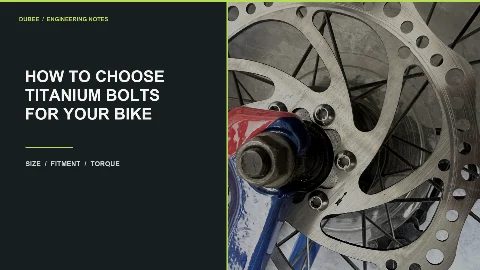
Sizing & Fitment
How to Choose Titanium Bolts for Your Bike: Size, Fitment & Torque Guide
Learn how to check bicycle bolt sizes, thread pitch, length, head fit and OEM torque requirements before choosing titanium rotor, stem or bottle cage bolts.
Updated: