Sizing & Fitment
How to Choose Bike Stem Bolts: M5 Lengths, Washers & Fitment
Compare M5×16, M5×18 and M5×20 stem bolts, learn how to measure length and check washers, fitment and installation.
Published: · Updated:
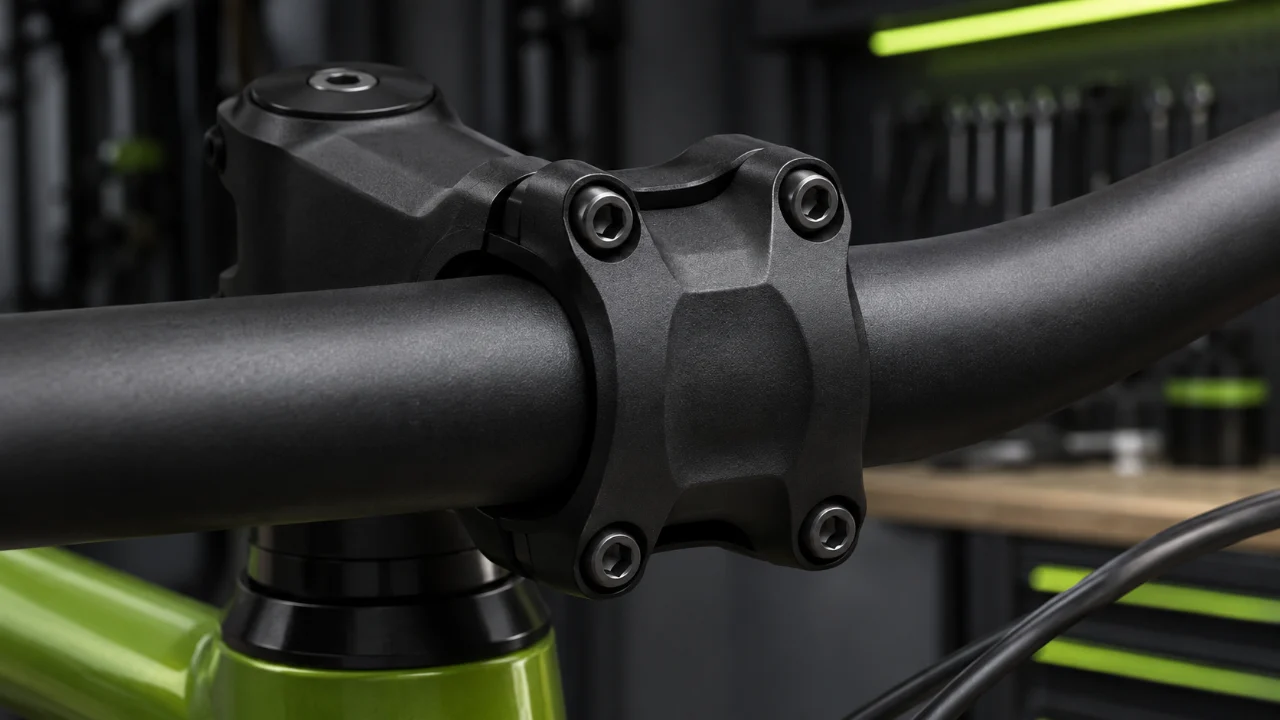
When shopping for bike stem bolts, start with the exact stem and the bolt's position. M5 tells you the nominal thread diameter; a length such as 16, 18 or 20 mm is another part of the description. Neither number alone tells you whether the head, washer, thread engagement or installation procedure will suit your stem.
First, Identify Which Bolt You Need
A threadless bicycle cockpit commonly has fasteners in three different positions:
- Faceplate bolts secure the plate that clamps the handlebar to the stem body.
- Steerer-clamp bolts tighten the stem around the fork's steerer tube.
- The headset top-cap bolt adjusts headset bearing preload during assembly. It does not perform the same job as the stem clamp bolts.
Do not assume that these positions use the same bolt simply because they are close together. Their lengths, heads, washers and installation requirements can differ. Keep removed bolts and any washers grouped by position. Park Tool's threadless stem guide explains the different parts of the assembly.
What Do M5×16, M5×18 and M5×20 Mean?
M5 denotes a metric thread with a nominal diameter of 5 mm. The second number usually describes the bolt's nominal length in millimeters, measured according to its head style. The designation may omit the pitch, which is the distance between adjacent thread crests measured along the bolt. Confirm pitch against the original bolt or the relevant drawing; diameter alone does not define the complete thread.
The differences between 16, 18 and 20 mm are small on a ruler, but they matter inside a stem. An extra 2 mm can make a bolt reach the bottom of a blind hole before the faceplate is clamped. A shorter bolt may leave insufficient usable thread engagement. The required length depends on the particular bolt position, component stack and threaded hole—not on the stem's brand name alone.
The dubee product page lists an M5 titanium stem bolt family with washers. When selecting a length, compare the option with the actual original fastener and request any missing measurements. The family name or a listed length does not establish fit for a particular stem.
How to Measure a Stem Bolt
For a conventional bolt with a head that sits above the surface, measure from the bearing face under the head to the end of the bolt. Do not include the height of the head. A flat countersunk screw uses a different length reference, so identify the head and seat before comparing measurements.
If a separate washer is present, identify whether it belongs to the assembly and measure the bolt from its own under-head bearing face. Record the washer's dimensions and orientation separately. A captive washer or special head can make the reference less obvious; use the fastener drawing or ask the supplier rather than guessing.
Measure the thread diameter and under-head length with calipers; use a thread-pitch gauge or documented specification to check pitch. Also note head diameter, height, drive type and any unthreaded section. A caliper is useful for identification but does not establish thread tolerance or finished-bolt strength.
Bolt length is not the same as thread engagement
Part of the bolt's length passes through the faceplate or other clamped parts before it reaches the threaded hole. A washer, unthreaded shank, thread runout and tip chamfer can also affect the length of fully formed thread available. A 20 mm under-head bolt therefore does not provide 20 mm of engagement inside the stem.
Likewise, a bolt that feels tight may have bottomed out rather than clamped the parts. LoamLab specifically warns that the blind holes in its own stem require attention to bolt length. That is an example of a design constraint, not a universal length rule for other stems. LoamLab stem installation.
Why the Washer Matters
A washer is part of the bolt-head bearing arrangement. Depending on the design, it can provide the intended contact surface between the head and faceplate or protect the component surface. Its outside diameter, inside diameter, thickness, profile and orientation can matter.
Do not add a washer to make an overly long bolt appear shorter, or remove a specified washer to gain thread engagement. Either change affects the stack and bearing arrangement. If the original washer is curved, captive, specially shaped or worn, identify the correct replacement instead of substituting a visually similar flat washer.
Firefly's faceplate instructions specify washer orientation for its own design, not other stems.
Head Shape, Drive and Clearance
A bolt can match the thread and length but still fail to seat correctly. Compare:
- Bearing surface: Does the underside of the head and any washer match the stem's seat?
- Head diameter and height: Is there space in the recess and clearance to surrounding parts?
- Drive: Does the correct, undamaged bit fully engage, with room to use a torque wrench?
- Washer: Are its shape, dimensions and orientation appropriate for that position?
A tapered-looking head is not necessarily countersunk. Check its bearing surface and request any missing dimensions.
Can You Replace Steel Stem Bolts With Titanium?
Titanium bolts are a popular choice for bicycle customization and can offer a weight reduction compared with similarly shaped steel hardware. Actual weight depends on the specific parts. Select a bolt that matches the stem's requirements for thread, length, head, washer and installation, and check any restrictions in the stem manufacturer's documentation.
A material name or advertised material strength alone does not establish the performance of a finished bolt or its suitability in a particular steering connection. If the necessary information is missing, a bicycle mechanic or the relevant supplier can help identify the correct hardware. For a broader discussion of the material, see why TC4 titanium bicycle bolts are selected.
Installation: Torque, Preparation and Faceplate Gaps
Use the torque and tightening sequence specified for the exact stem and applicable components. The required thread and under-head condition also matters: lubrication or another treatment can change friction and therefore the relationship between torque and bolt tension. A generic M5 titanium torque value cannot describe every stem assembly.
Faceplate designs differ. Some specify a particular side of the plate to seat first; others use a different pattern or gap. Firefly's instructions describe a no-gap upper edge for its own stem, while FSA's ZS022.v8 stem instructions describe an alternating pattern for covered FSA models. Neither sequence is a rule for every stem. Follow the specific instructions instead of forcing both gaps to look the same.
Before riding, follow the manufacturer's checks for seating, gaps and handlebar security. If a bolt binds, bottoms out, has a damaged drive or the parts do not seat correctly, stop and investigate. A torque reading alone does not prove correct engagement. For steering components, ask a qualified mechanic if you are unsure.
Stem Bolt Buying Checklist
| Check | What to record |
|---|---|
| Component | Stem manufacturer, model and bolt position |
| Thread | Diameter, pitch and specified tolerance |
| Length | Correct measurement datum and original bolt length |
| Engagement | Available threaded depth and any risk of bottoming |
| Head | Bearing shape, diameter, height and surrounding clearance |
| Drive | Required bit and tool access |
| Washer | Whether required; shape, thickness, diameter and orientation |
| Installation | Specified preparation, torque, sequence and gap |
| Replacement | Any manufacturer restrictions and missing supplier specifications |
Frequently Asked Questions
Are all M5 stem bolts interchangeable?
No. M5 identifies nominal thread diameter; pitch, length, head, washer and component requirements can differ.
How do I know whether I need M5×16, M5×18 or M5×20?
Identify the position, measure the correct original fastener from the appropriate datum, and check the stem's requirements. Do not choose solely by brand or appearance.
Should the washer be included in the length measurement?
For an ordinary protruding-head bolt, measure the bolt from under its head to its tip and record a separate washer independently. Check the drawing for captive washers or unusual heads.
Can I add a washer to use a longer bolt?
Do not use an extra washer as a substitute for the specified length. The washer changes the stack and bearing arrangement; choose hardware suited to the design.
Can titanium stem bolts replace steel ones?
They can be considered when their complete specification suits the stem and its manufacturer's requirements. Material and matching diameter alone are not enough to establish fit.
What torque should I use?
Follow the exact stem and component instructions for the hardware and preparation used. Do not rely on a universal torque for M5 titanium bolts.
Conclusion
The most useful comparison is the complete fastener in its actual position: thread, under-head length, head, washer and available engagement. With the stem instructions and measurements in hand, you can choose a suitable option with confidence. For other positions on the bike, read our bicycle bolt size and fitment guide.
Related Articles
View all articles →
Sizing & Fitment
Are All 6-Bolt Disc Rotor Bolts Interchangeable? Size, T25 & Torque Explained
Learn how to check M5×10 and T25 rotor bolts for fit, thread engagement and clearance—and where to find the correct installation torque.
Updated:
Sizing & Fitment
How to Choose Titanium Bolts for Your Bike: Size, Fitment & Torque Guide
Learn how to check bicycle bolt sizes, thread pitch, length, head fit and OEM torque requirements before choosing titanium rotor, stem or bottle cage bolts.
Updated: